How Custom Software Development Boosts Efficiency, Productivity and Business Growth

Most growing companies reach a point where their software starts slowing them down. Teams copy data from one system to another. Managers wait for reports. Customers get delayed updates. Employees create workarounds because the tools they use were built for a broad market, not for the way the business actually operates.
Custom software development addresses that gap. Instead of forcing teams to adapt to a generic tool, a business builds software around its workflows, goals, customer needs, and growth plans. Done well, it can reduce manual work, improve decision-making, protect service quality, and create room for scale.
This does not mean every company needs custom software for every problem. Standard tools are often the right choice for common needs like email, payroll, or basic accounting. Custom development becomes valuable when the process itself is unique, when existing tools create waste, or when better software can directly improve revenue, cost control, or customer experience.

Custom software removes the friction that generic tools leave behind
Generic software serves a wide audience. That is its strength and its limit. It gives companies a ready-made way to handle common tasks, but it often includes features that do not fit and misses details that matter.
Custom software starts from a different question: How does this business actually work?
That question matters because many productivity issues are not caused by employee effort. They come from poorly matched systems. A sales team may enter customer details in one tool, then repeat the same information in another. A project manager may use spreadsheets because the company’s planning software cannot match real project stages. A warehouse team may print paper lists because the inventory system updates too slowly.
These small frictions add up. They create delays, errors, and hidden labor costs.
A tailored system can improve efficiency by:
Reducing duplicate data entry
Connecting key business processes
Automating routine approvals and alerts
Giving managers real-time status updates
Replacing fragile spreadsheets with shared records
Standardizing workflows across departments
For example, a distributor with multiple warehouses may struggle when stock counts, purchase orders, and delivery schedules live in separate systems. A custom inventory and dispatch platform can connect those processes. When an order comes in, the system can check stock, assign the nearest warehouse, update the picking list, and notify the delivery team. That does not just save time. It reduces customer delays and improves order accuracy.
The same principle applies across industries. A healthcare services company may need a secure scheduling system that matches staff skills, patient needs, and location rules. A construction firm may need field reporting that works from job sites and sends updates to finance. A manufacturer may need a quality control system tied to each production batch.
The common thread is simple: software should match the work, not the other way around.
Productivity improves when people spend less time managing tools
Productivity is not just about doing more tasks. It is about giving skilled people more time for valuable work.
When software is poorly fitted, employees become system managers. They export files, clean spreadsheets, chase approvals, and confirm whether data is current. These activities may feel normal, but they drain time from sales, service, production, planning, and leadership.
Custom software can shift that balance.
A well-designed internal platform can guide employees through a process step by step. It can show only the fields they need, reduce unnecessary clicks, and prevent common errors before they happen. For managers, dashboards can show the current state of operations without waiting for someone to prepare a report.
This is especially useful for growing companies. As headcount rises, informal processes become harder to manage. A small team may handle customer requests through email and chat. At 20 people, that may still work. At 100 people, requests get lost, response times vary, and no one has a clear view of workload.
Custom service software can fix that by routing requests, assigning owners, tracking response times, and showing patterns. Leaders can see whether delays come from staffing, training, supply limits, or unclear process steps. That makes improvement practical rather than guess-based.

Custom software can also reduce training time. Instead of teaching employees how to bend a generic tool around internal rules, the system can reflect those rules directly. For instance, a custom quoting tool can include approved pricing logic, required review steps, and product limits. New employees learn the company’s process while using the tool.
That creates a double benefit. Work gets done faster, and quality becomes more consistent.
Better business decisions come from cleaner, more connected data
Leaders need timely information. Yet many businesses still rely on reports built from copied spreadsheets, disconnected systems, and delayed updates. That creates a serious problem: by the time the information reaches decision-makers, it may already be outdated.
Custom software can improve decision-making by creating a clearer source of business data. When sales, operations, inventory, service, and finance share connected records, leaders can see cause and effect more clearly.
For example, if customer complaints rise, a connected system can help trace whether the issue relates to a supplier, a delivery route, a product batch, or a staffing gap. Without that connection, each team may only see part of the story.
This is one reason many successful companies invest heavily in business-specific technology. Amazon’s fulfillment systems, for example, are not ordinary retail tools. They support inventory placement, picking, delivery planning, and customer updates at massive scale. Netflix built software around viewing behavior and content delivery, helping it support a streaming model that standard media systems were not designed to handle. Domino’s invested in digital ordering and delivery tracking, changing pizza ordering from a phone-based process into a smoother digital experience.
These are large companies, but the lesson applies to smaller firms too. The value comes from matching software to the business model.
A regional equipment rental company, for instance, may need custom scheduling software that tracks equipment availability, maintenance windows, delivery routes, and contract dates. A generic booking tool may handle reservations, but it may not account for repairs, transport timing, or location-specific rules. A custom system can bring those details together and help the company make better use of its assets.
That can affect revenue directly. Better visibility can reduce idle equipment, prevent overbooking, and help sales teams promise dates with more confidence.
Successful custom software starts with client needs, not features
The best custom software projects do not begin with a feature list. They begin with understanding.
A development team needs to learn how the business makes money, where delays happen, which tasks are repeated, which rules are fixed, and which ones change. That discovery phase is not a formality. It shapes the entire outcome.
Strong discovery usually includes:
Interviews with leaders and day-to-day users
Review of current tools, spreadsheets, and reports
Mapping of key workflows
Identification of bottlenecks and repeated errors
Agreement on measurable goals
Clear priorities for the first version
This matters because different stakeholders often see different problems. A chief executive may focus on growth and cost control. A technology leader may focus on system stability and data security. A department head may care most about turnaround time. Frontline employees may know where the process breaks.
Custom software succeeds when these views are connected into one practical plan.
For example, a company may ask for a new customer portal. During discovery, the real issue may turn out to be slow internal approval steps. In that case, building a polished portal without fixing the workflow would only expose the delay more clearly. A better solution might combine a customer portal with internal task routing, status alerts, and approval rules.
The right solution is not always the biggest one. It is the one that solves the real problem.
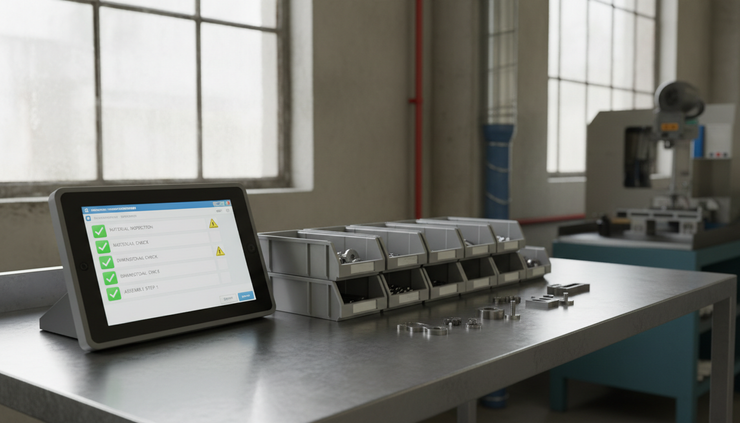
This is also where budget control begins. Building everything at once increases risk. A focused first release can solve the highest-value problem, prove adoption, and guide later improvements. Many teams start with the workflow that causes the most delay or the process that most affects customers.
Custom software for startups can follow the same approach. A young company may not need a large system at first. It may need a focused product, booking tool, marketplace, or internal platform that proves the business model and can grow as demand increases.
Custom development can create long-term business value
Custom software is an investment, so it should be judged by business outcomes, not by the number of screens or features delivered.
The strongest returns often come in several forms.
Lower operating cost
Reducing manual work can cut the hours spent on repeat tasks. For example, if a finance team spends days each month matching invoices to delivery records, a custom system can connect those records and flag only the exceptions that need review.
Higher capacity without matching headcount growth
A company may handle more orders, customers, or projects without adding staff at the same rate. This can be especially valuable in industries with tight labor markets.
Better customer experience
Customers notice faster responses, accurate status updates, fewer errors, and easier self-service. Web applications can give customers a secure way to place orders, check progress, upload documents, or request support without waiting for a manual reply.
Stronger control and security
Custom software can reflect the company’s access rules. Employees see what they need for their role. Sensitive data can be protected with clear permissions and tracking. This is especially important for companies that handle customer records, financial information, or regulated data.
Room to adapt
Markets change. So do customer expectations, supplier rules, and internal processes. A custom system can be adjusted as the business changes, instead of waiting for a vendor to add the right feature.
Still, custom software is not risk-free. Projects can fail when goals are vague, users are not involved, or teams try to build too much at once. Good planning reduces that risk. Clear success measures help as well.
Useful measures may include:
Time saved per process
Error rate reduction
Faster customer response
Higher order capacity
Shorter reporting cycles
Improved employee adoption
Reduced use of manual spreadsheets
The goal is not to build software for its own sake. The goal is to create a business system that supports growth with less waste.
FAQ
How do I know if my business needs custom software?
Custom software is worth considering when standard tools force too many workarounds, when manual tasks slow growth, or when a unique process gives your business an advantage. If the same issue keeps appearing across teams, it may be a software fit problem.
Is custom software only for large companies?
No. Large companies often have more complex systems, but smaller businesses can benefit from focused custom tools. A scheduling platform, quoting system, inventory tracker, or customer portal can create value without becoming a large project.
How long does custom software development take?
The timeline depends on the size and complexity of the project. A focused first version may take a few months, while a larger system can take longer. The safest approach is to define the highest-value problem first and build in stages.
What makes a custom software project successful?
Success usually comes from clear goals, strong discovery, user input, careful testing, and steady communication. The software should solve real business problems and fit how people actually work.
Can custom software work with the tools we already use?
In many cases, yes. Custom systems can often be built to share data with existing accounting, sales, inventory, or customer service tools. This helps avoid unnecessary replacement and protects past investments.

The practical next step is to identify the work that slows growth
Custom software development works best when it starts with a clear business case. Look for the processes that create delays, duplicate work, unclear ownership, or poor customer visibility. Then ask whether better-fit software could reduce those problems in a measurable way.
For many companies, the answer is yes. A well-planned custom system can improve efficiency, raise productivity, support better decisions, and create a stronger foundation for growth.
If you are ready to explore where custom software could help your business, request a consultation with SwiftSol.


Comments